
Ford Mustang: History of an American Legend
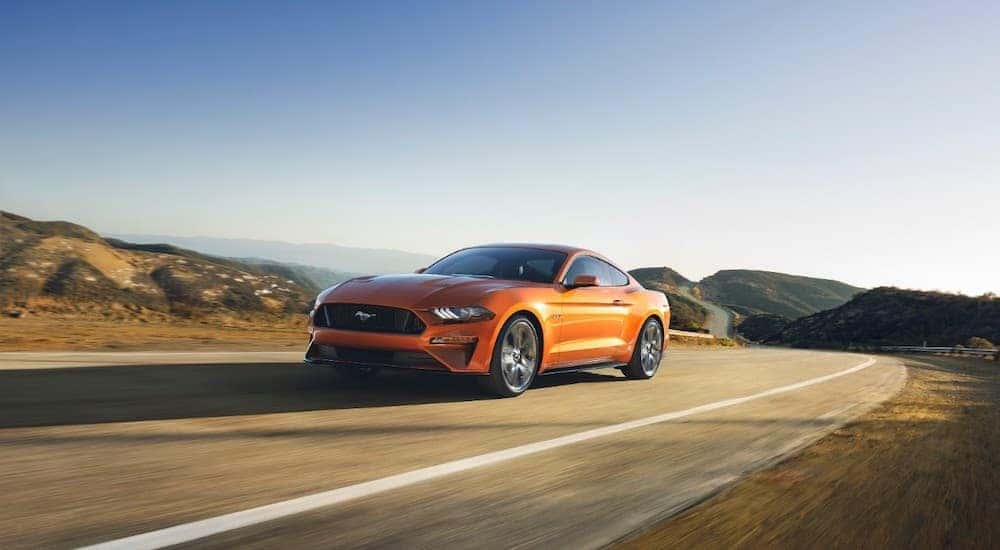
For almost 60 years, the Ford Mustang has been in a class all its own––even when competing with other “pony cars,” there’s no denying that every other model is just struggling to catch up. Although there’s a lot of focus right now on the future of the Mustang lineup with the reveal of the all-new 2024 model, as your used Ford dealer, we also have a great deal of love and affection for the Mustang models that have come before. Whether you’re interested in a pre-owned Mustang, want to know more about the roots of this American classic, or you want a sense of where the Mustang has been to see where it’s going, we completely understand. Let’s take a look at the story of one of the most famous and influential cars in automotive history.
Initial Mustang Development
The very first concept version of the Ford Mustang was a far cry from what we have today and from what they eventually released. Initially, the Mustang I concept car in 1962 had a mid-engine design and a two-seat cabin. Despite its mid-engine layout, this early model still had a fairly long nose, giving it proportions that would remain throughout its development as a production model. The early concept was a gorgeous vehicle, but you’d be hard-pressed to easily recognize it as a Mustang.
Development of this vehicle began in the early 1960s as the brainchild of Lee Iacocca, who was then vice president and general manager of Ford. He wanted to develop a sporty model aimed at the youth market, and his assistant general manager and chief engineer, Donald Frey, led the project and supervised it through an incredibly short 18 months of development. There are several versions of how the model got its name, but Ford says it was named after the P-51 Mustang fighter plane that was a vital part of the Allied victory in World War II.
A second concept model, the Mustang II, was worked on in 1963, and it evolved into a four-seat model closer to what was eventually made. Ford began production of the Mustang nearly half a year before the scheduled production start for its 1965 model year, with production continuing along with other vehicles. Those models built prior to the start of full production are often referred to as “1964 ½” models, with those that were built later called “1965” Mustangs, but Ford has officially referred to all of the first-year models as 1965.
Release of an Icon
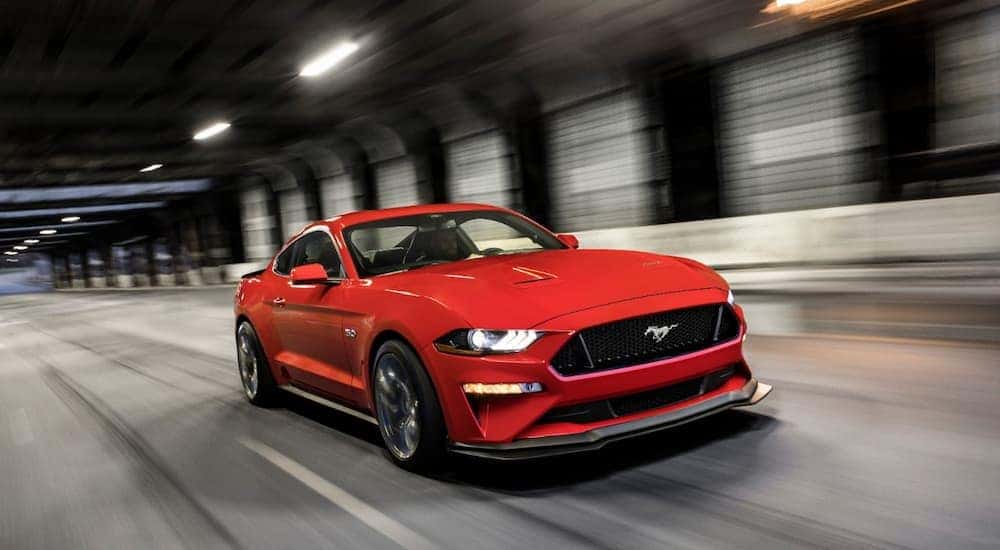
In order to build excitement for the Mustang, Ford unveiled it at the World’s Fair in Flushing Meadows, New York, on April 17, 1964. There’s a reason Iacocca was a legend in the auto industry. To coincide with its unveiling at the World’s Fair, Ford had Mustang models at dealerships that very day. People were so excited by the Mustang’s reveal that they immediately went to dealerships and were able to see it in person and buy one. Ford had expected about 100,000 Mustang sales in the first year; nearly 22,000 Mustangs sold that first day, with more than 400,000 models sold by the end of the year.
When it was released, the 1965 Ford Mustang sold for about $2,300 MSRP––that’s about $22,000 in modern purchasing power based on inflation. It was a massive success, featured on the covers of Newsweek and Time magazine just before its release; the night before it went on sale, it was featured in TV commercials on all three major networks. This was automotive advertising at its finest, and the response speaks for itself. That same year, it was featured in the James Bond movie “Goldfinger,” and in 1968, filmmakers used a Mustang 390 GT in the Steve McQueen classic “Bullitt” to set a new standard for car chase sequences in film.
About 681,000 1965 Ford Mustang models were sold. In 1966 Ford built its one-millionth Mustang, and sales remained incredibly strong. But sales weren’t the only thing growing throughout the 1960s: the 1967 model grew in size to allow for a larger engine, followed by the 1969 Mustang growing nearly four inches longer. Moving into the 1970s, some drivers and critics began to complain that the Mustang just kept getting larger without giving much back, and sales dipped in the early part of the new decade.
Adapting to the 1970s
The Oil Crisis of the 1970s drastically changed the auto industry forever, and the Mustang was certainly no exception to this. Throughout the latter half of the ‘70s, the Mustang shrank––some would say it was much needed after its prior growth––and the reaction was quite positive. The release of the “Mustang II” in 1973 saw the launch of the second generation for this icon, and MotorTrend named it their Car of the Year for 1974. By the end of the decade, the Oil Crisis was over, and people interested in a pony car wanted something that lived up to its legacy rather than something economical; Ford prepared to deliver.
Changes Throughout the 1980s and 1990s
With its 1979 model, Ford launched an all-new generation of the Mustang built on a new platform called “Fox.” This was designed to bring it back to its roots a bit and included numerous engine options, including a turbocharged beauty, a powerful V6, an I-6, and a robust V8. Throughout the 1980s, the Mustang continued to evolve, and the 1987 model launched with a redesign that drips with an unmistakable ‘80s aesthetic.
Sales on the Mustang began to dip as the 1980s drew to a close, but Ford was ready with the launch of an all-new fourth-generation model for 1994. With this redesign, Ford brought back some recognizable design features to make it feel more like a Mustang, including an interior that had throwback styling throughout. The Fox platform remained the foundation of this generation of the Mustang, though it was growing old; it received a facelift in 1999, but a new generation was still a ways off.
Racing Ahead as Others Fell Back
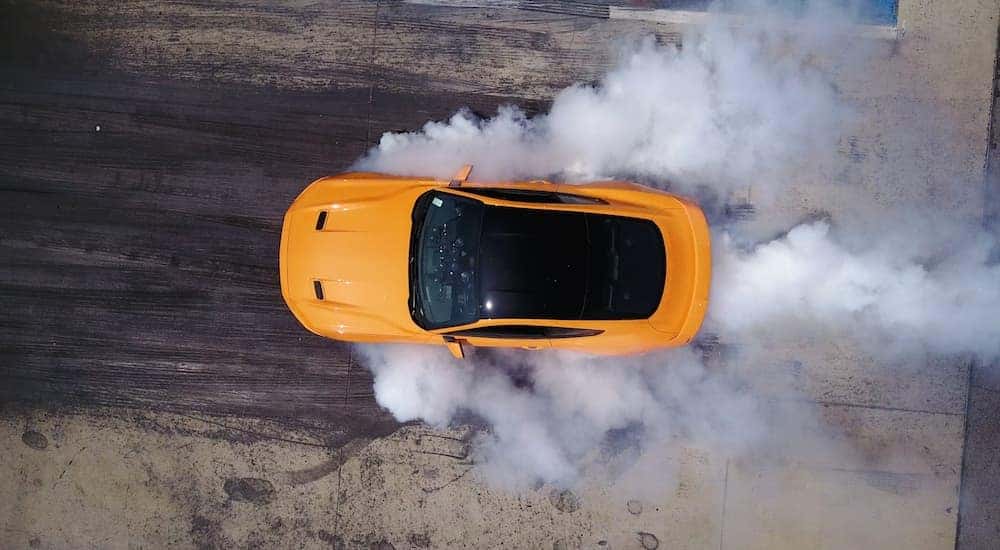
Throughout its history, Ford has never been afraid to try new things and embrace what it believes in, even as its competitors shy away from changes. In 2002, Chevy discontinued the Camaro, and this left the Mustang as the only pony car out there––even Dodge had faltered and grown nervous about the changing car market. When the 2005 Mustang was revealed, it made a massive splash and got people excited in a way not seen since the unveiling of the original some 40 years prior. Ford left the Fox platform behind and revitalized the Mustang to demonstrate that it was better than ever.
Response to the Mustang was so substantial that other manufacturers took notice: GM made a move to bring back the Camaro, and Dodge brought the Challenger back from the dead to give Ford some competition. After a facelift in 2010, an all-new fifth-generation Mustang launched for the 2015 model year, celebrating the 50th anniversary of this absolute legend. A few years later, Ford introduced its first-ever true addition to the Mustang family with the all-electric Mustang Mach-E, once again shaking things up for fans and drivers.
Now that we’ve got our first taste of the upcoming seventh-generation Mustang, it’s clear that Ford isn’t looking to abandon its roots anytime soon. With the popularity of the Mustang Mach-E, however, we can’t help but wonder how long it will be before we see a hybrid Mustang pony car and, eventually, an all-electric model. Ford is set to dominate the electric truck market with its F-150 Lightning, and the sports car and pony car segment could well be the next big battleground. As soon as we know more, you’ll be the first to know. Come visit us at Pearson Ford to learn more about the upcoming all-new Mustang, and reserve one today!
0 comment(s) so far on Ford Mustang: History of an American Legend